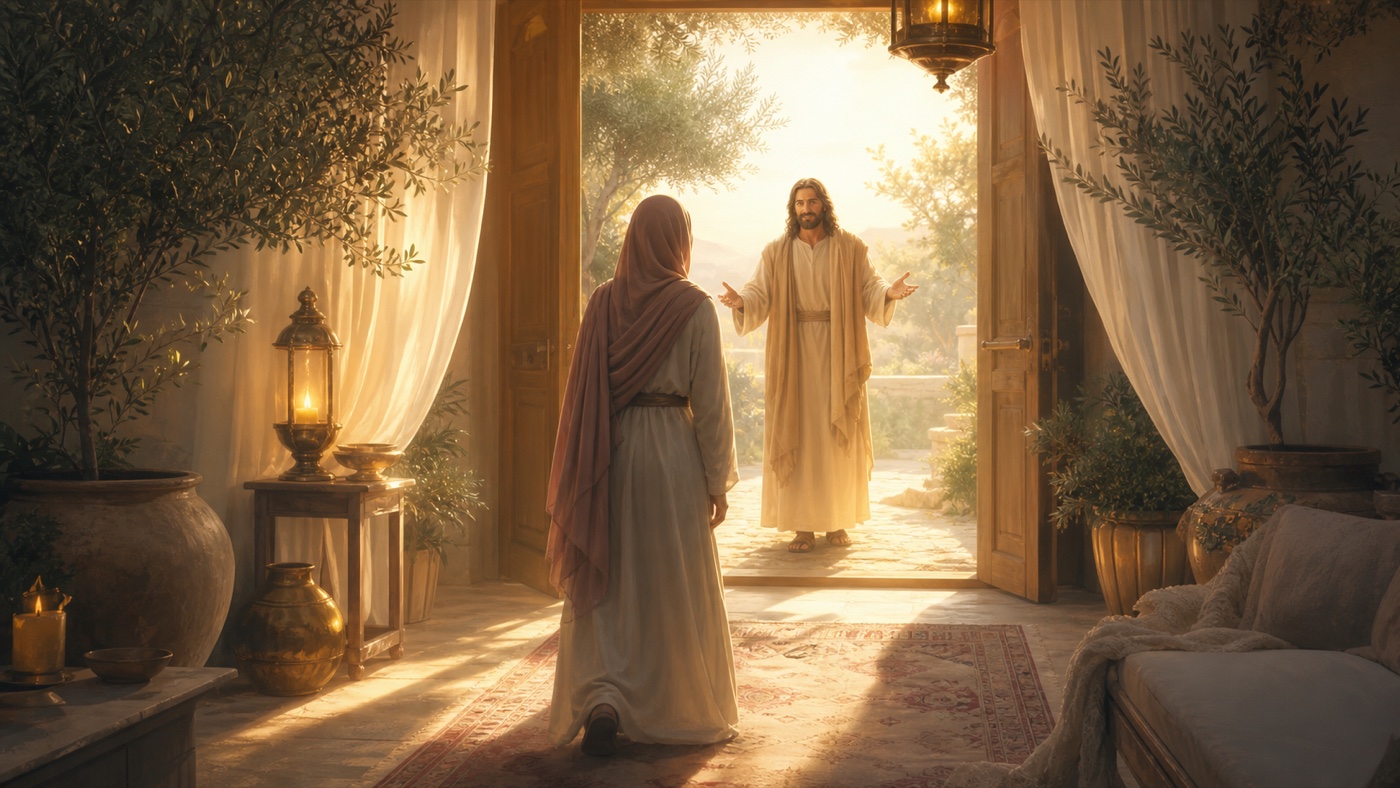
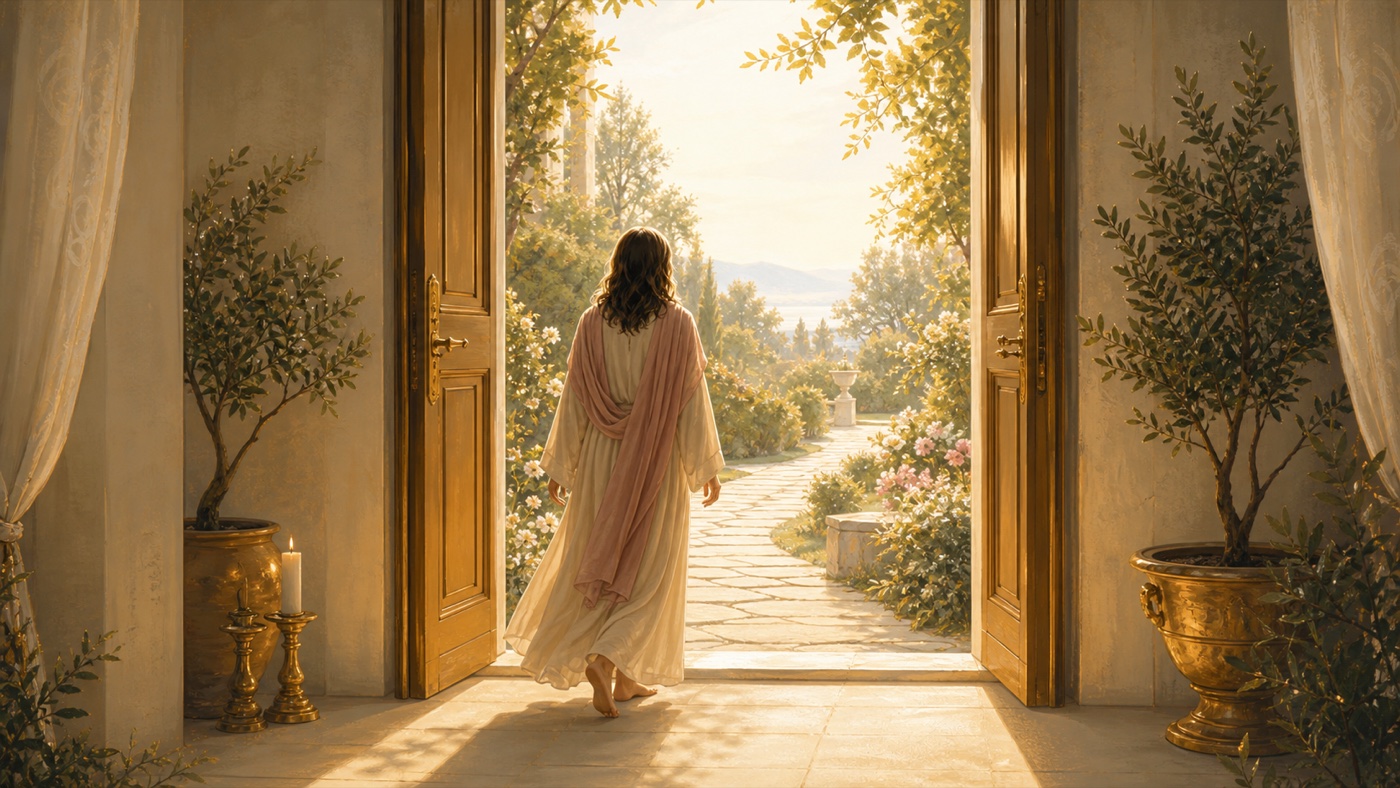
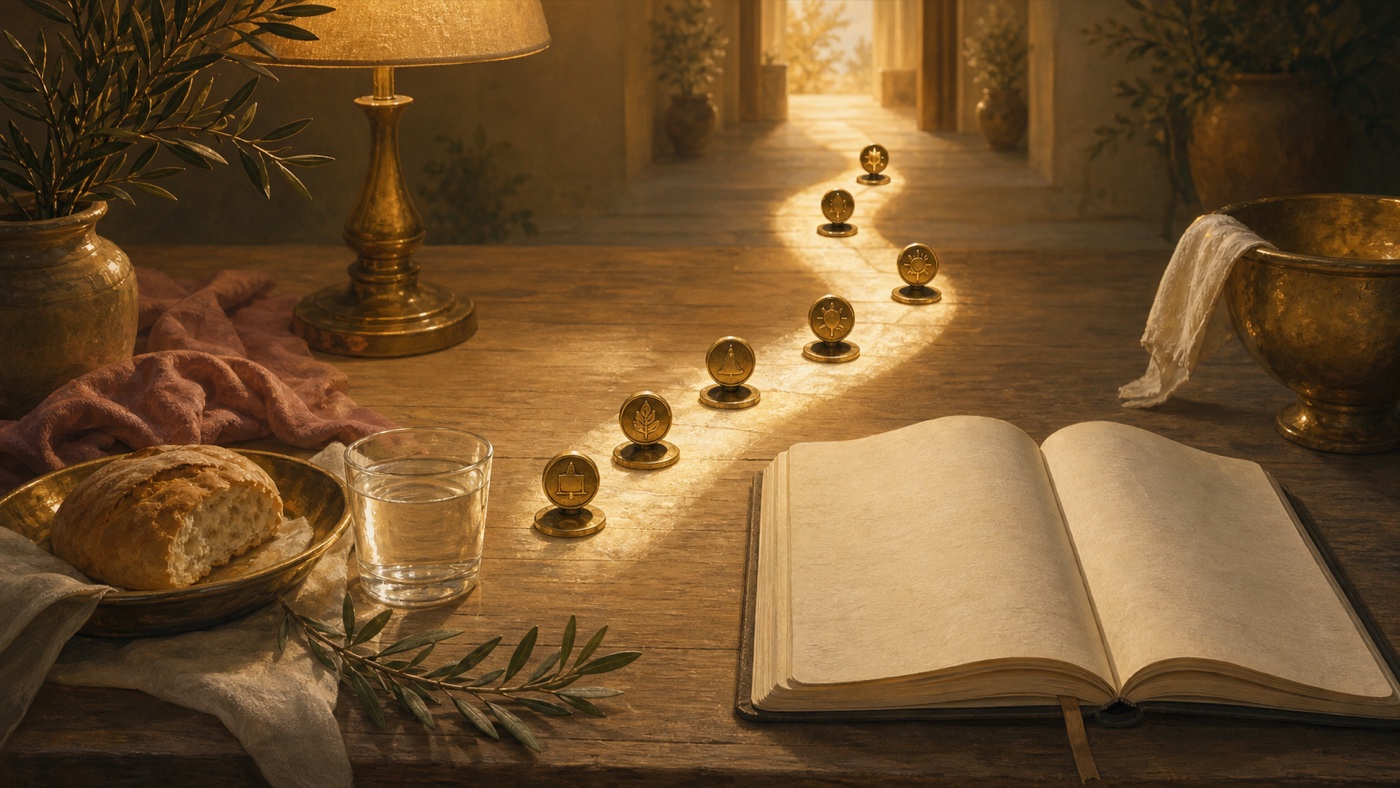
The Path Back to Nearness illustration

The Sanctuary Pathway

The Path Back to Nearness

Finding your way home to the God who has been waiting

A simple map of the journey in this book. You do not have to memorize it. You only have to begin.

This is a pathway, not a formula. Some days you will walk all of it. Some days you will stay at one step and that will be enough.

The point was never to finish a list. The point is to come near.

The Seven Steps at a Glance illustration

The Seven Steps at a Glance

Introduction — The Ache of Distance illustration

The Ache of Distance

Most people do not come to God with a question. They come with a feeling.

They may not have a word for it. They might call it dryness, or restlessness, or guilt that will not quite leave. They might call it confusion, or the strange tiredness that settles over prayer until it feels like talking to a ceiling. Some would call it doubt. But underneath the names, it is usually the same thing: a sense of distance. A feeling of being far from a God they still, somewhere, believe is real.

It is one of the loneliest feelings a person can carry, partly because it is so hard to admit. You can believe in God and still feel unseen by Him. You can know the right words about faith and still wonder how to actually come near. You can have done everything you were told and still feel like you are standing outside a house you were once welcomed into.

And here is something you may need to hear before we go any further: this feeling is not a verdict. It does not mean you have failed at faith, or that God has quietly given up on you, or that you are further gone than the people around you who seem to find Him so easily. The sense of distance is one of the most common experiences in the whole life of faith. Some of the people closest to God have written some of the most honest words about feeling far from Him. The ache is not proof that something is wrong with you. Often it is the very thing that turns a heart back toward home.

If any of that sounds familiar, this little book is for you.

It will not begin by telling you to try harder. It will not hand you a system to master or a test to pass. It begins somewhere gentler and, I think, truer: with the quiet news that the distance you feel is not the whole story, and that you are not the one who has to close it.

There is an old picture in the Bible for all of this. It is the picture of a house — God's house, sometimes called the sanctuary. For a lot of people that word lands cold, like a diagram of ancient furniture they were once supposed to understand. But the sanctuary was never meant to be a diagram. It was meant to be an answer to exactly the ache you may be feeling now. It is the picture of a God who did not want to stay far away, and who made a way to come near.

That is what this book is about: not religious machinery, but a path back. A way home for tired souls. We will walk it slowly, and we will not leave anyone behind at the door.

So before anything else, let me say the thing the rest of the book will keep saying in a hundred ways: the distance you feel is real, but it is not permanent, and it is not God holding out. The whole story moves the other direction. He is the one coming toward you.

Chapter 1 — God Wants to Be Near You illustration

God Wants to Be Near You

Here is the foundation everything else rests on. It is short, and it is stronger than it looks: God wants to be near His people.

Not tolerates. Not permits. Wants.

This is where the picture of the sanctuary begins, and starting here changes everything. If you start somewhere else — with rules, or symbols, or a list of things to get right — the whole subject turns heavy before it ever becomes beautiful. But the sanctuary does not start with what God demands. It starts with what God desires. And what He desires is you, near.

The sanctuary is called God's house. That does not mean God can be boxed into a building, or that the point is the architecture. A house is something simpler and warmer than that. A house is a place of presence, of welcome, of belonging, of shared life. To call the sanctuary God's house is to say that God is not content to stay distant from the people He made. He moves toward them. He makes a place to dwell.

This is why so much of the Bible circles back to one idea: God with us. From a tent in a wilderness, to a temple in a city, all the way to Jesus — God keeps closing the gap. The whole movement of the story is a God who refuses to remain far away. And it reaches its center in Christ, who is God-with-us in person — not a symbol of nearness but nearness itself, come to find us. That is what keeps the sanctuary from being locked away in the past. It was always pointing forward to the God who would come near in the flesh.

There is a scene early in the Bible that captures the whole human problem in a single picture. God comes down on a mountain to be near His people, to speak with them, to make Himself known — and the people, frightened, pull back. They ask for distance. They want someone to stand between them and God so they will not have to come close themselves. It is one of the saddest moments in Scripture, and one of the most honest, because most of us have lived it. God moves toward us and something in us flinches away. We keep our distance from the very nearness we ache for.

If that is the human condition, then the sanctuary is God's gentle answer to it. He does not force His way past our fear. He builds a way of approach — a house with a door, a path we can actually walk — so that the people too frightened to come up the mountain can still, step by step, come home. The distance at Sinai was never God's idea. It was ours. And ever since, He has been making a way to close it.

That matters for how you hear everything else, because most of us have been trained to hear religion as a demand before we hear it as an invitation. We hear, clean yourself up first. We hear, perform correctly. We hear, learn the system or stay outside. But that is not where the sanctuary begins. It begins with a God who wanted communion so much that He built a way to have it.

None of that erases the real things — surrender, honesty, change, obedience. They are all still here. But notice where they sit. They sit inside the relationship, not as the price of admission to it. The sanctuary is not a ladder you climb to reach a reluctant God at the top. It is a path a willing God laid down so you could find your way back to Him.

And there is one more gift hidden in calling it a house. A house, when it is a good one, is a place of safety. Before the sanctuary asks anything deep of you, it offers you something first: refuge. A place to be when you have nowhere else to go. That is not a shallow way to start. It is the right doorway. If God's house is not safe, nothing else about it will make sense. So let that be the first thing you know as you step inside: you are not walking into a courtroom. You are walking toward home.

Chapter 2 — Jesus at the Center illustration

Jesus at the Center

There is a danger in a book like this, and I would rather name it now than let it quietly do its damage later.

The danger is that the sanctuary becomes a thing you study instead of a place you meet someone. You can learn the steps, the symbols, the order, the meaning of each piece, and walk away impressed and still completely alone. Religious symbols have a strange power to become interesting and cold at the same time — a chart you understand and a room you never actually entered.

The cure for that is a Person.

Every part of this pathway points to Jesus. Not as a figure at the far end of the journey, waiting to see if you make it. He is not the reward for finishing well. He is the one who meets you at the door and carries you the whole way through. Remove Him from the center and the sanctuary drifts toward fear, technicality, and quiet self-measurement. Keep Him at the center and the same pathway becomes pure grace.

Watch how it works. Each step of the way raises a real human question, and Jesus is the answer to every one of them.

How can someone who feels shut out come in at all? Jesus is the door. He is the way in, and the way in is open.

What happens to the guilt, the failure, the weight you cannot put down? Jesus is the Lamb. He carries what you were never strong enough to carry.

How does a forgiven person actually become clean again, and not just pardoned? Jesus is the Word that washes.

How do you walk after that, when your own willpower keeps running out? Jesus gives the light of His Spirit, so the walking does not depend on you grinding it out alone.

What feeds a soul over the long haul, past the first burst of feeling? Jesus is the bread.

And when your prayers come out weak, scattered, half-formed — how do they ever reach God? Jesus carries them. He is the one who makes your poor prayers acceptable.

And at the very center, who is it that brings you near to God and keeps you there? Jesus, your great High Priest, whose whole work is to bring people home.

This is why the sanctuary stays warm instead of turning into a test. If Jesus is at the center, then confession is not despair — it is honesty in safe hands. Cleansing is not self-improvement — it is a gift. Prayer is not a performance you might fail. And the deepest, holiest part of the journey is not first a threat to survive. Every single step is anchored in what Jesus provides, not in what you produce.

There is one more thing worth saying plainly here, because it overturns how a lot of people quietly feel about God. The High Priest in this house is not the prosecutor. He is the advocate. His ministry is not against you, scanning for reasons to keep you out; it is for you, doing everything to bring you in and keep you near. The whole reason the sanctuary exists is rescue, not accusation. If you have carried a picture of a God who is mostly disappointed in you, looking for the line you will cross so He can finally turn away — that picture does not survive contact with the One at the center of this house. He is on your side. He always was.

And He is not asking you to walk a road He never walked. Jesus Himself lived the sanctuary way — entering with praise, surrendering to the Father, depending on the Spirit, feeding on the Word, praying for others, resting in His Father's nearness. He knows the path from the inside. When He invites you to walk it, He is not handing down instructions from a safe distance. He is offering to walk it with you, the way a friend who knows the trail walks beside the one who is afraid of getting lost.

So as we walk, keep your eyes on Him and not on the furniture. The symbols are only valuable because of who they reveal. Lose the symbols and you lose a little. Lose Jesus and you lose everything.

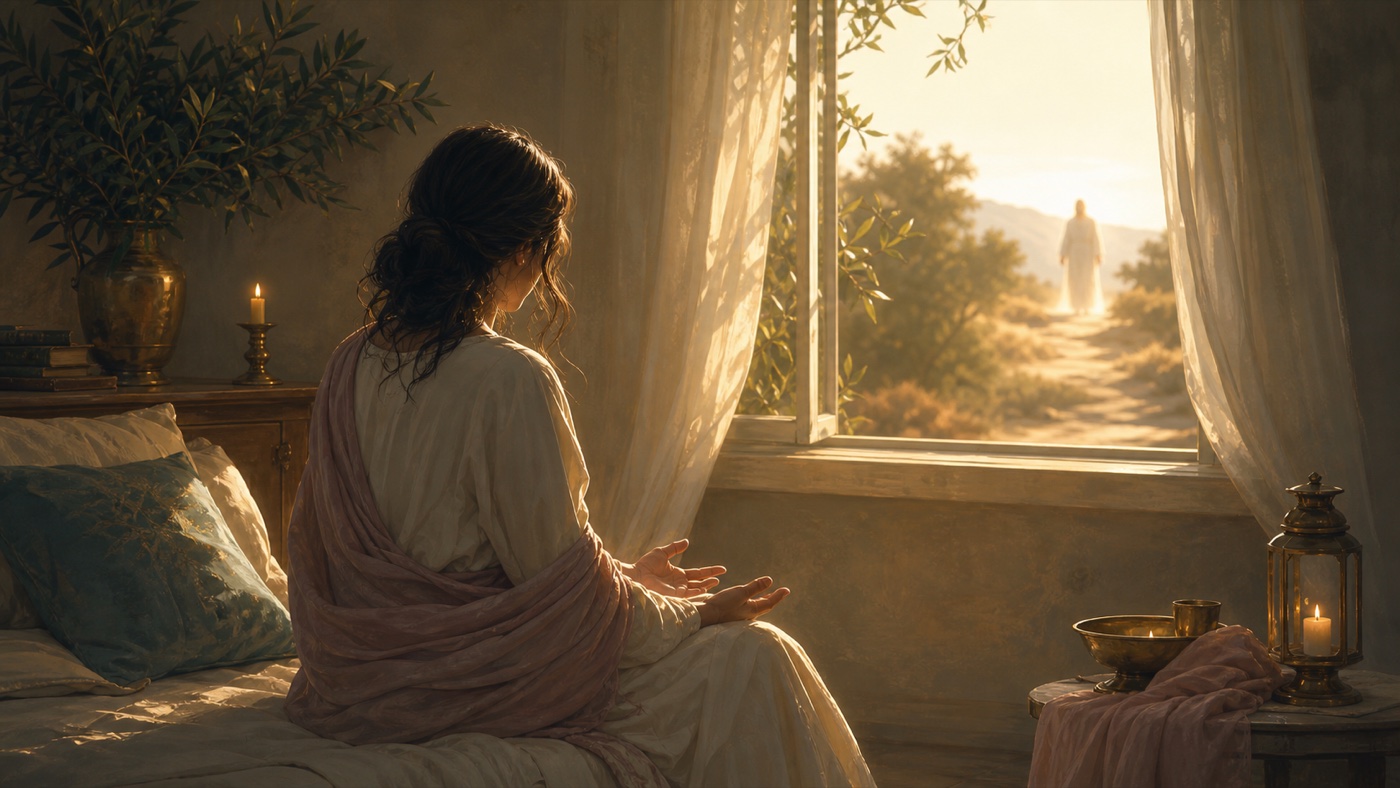
Chapter 3 — A Pathway, Not Just a Command illustration

A Pathway, Not Just a Command

If you have ever been told to "draw near to God" and felt no closer for being told, you already understand why this chapter matters.

A command can leave you stranded. Come back is true, but on its own it is not enough, because the very thing you may not know how to do is how. Distance is rarely a single problem with a single fix. Sometimes it is guilt. Sometimes fear. Sometimes a wrong picture of who God is. Sometimes it is just exhaustion, or pain, or the numbness that settles in when prayer has felt thin for a long time. "Try harder" does not touch any of that.

Here is the kindness in the sanctuary: it does not only say come back. It shows a way.

There is an entrance, so the shut-out can come in. There is a place for guilt, so the burdened can lay it down. There is washing, so the worn-out can be made new. There is light, so the confused can see. There is bread, so the hungry can be fed. There is rising prayer, so the isolated are no longer alone. And at the end there is mercy and nearness — the answer to the very ache that started the whole journey.

Each movement answers something. That is the genius of it. Distance is not one locked door; it is several, and the pathway has a key for each.

Look at how precisely the answers fit the wounds. Entrance answers exclusion — the fear that you do not belong inside. Sacrifice answers guilt — the weight you cannot put down by trying harder. Washing answers the sense of being defiled, unclean in a way apology never quite fixes. Light answers confusion, when you genuinely do not know the way forward. Bread answers hunger, the slow starvation of a soul running on empty. Rising prayer answers isolation, the feeling that no one is listening. And mercy answers fear — the deepest fear of all, that if God truly saw you, He would turn away. Whatever shape your distance has taken, there is a place on this path that speaks directly to it.

That is also why the pathway is so forgiving in practice. You do not arrive at it as a finished person, and you are not expected to. You come as you actually are — with whichever of those doors feels most locked today — and you let the path meet you there. Some seasons you will need to linger at the Altar. Other seasons you will be desperate for the Table, or aching for the rest of the Most Holy Place. The path bends to where you are. It was built for people on bad days as much as good ones.

You may have heard these movements called the Seven Steps: the Gate, the Altar, the Laver, the Candlestick, the Table, the Incense, and the Most Holy Place. We will walk them one at a time in the second half of this book. But before we do, one guardrail has to go up, because everything depends on it.

The Seven Steps are a pathway, not a formula.

A formula says: do these things in this order and the result is guaranteed. It turns prayer into a machine and God into something you operate. A pathway says something humbler and warmer: here is a wise way to walk with Someone who loves you. Prayer is a relationship, not a technique. God is not managed by getting the sequence right.

And yet — relationships still have a shape. A good conversation can move from greeting, to honesty, to listening, to rest. The Seven Steps simply give your time with God that kind of shape. They keep prayer from collapsing into a pile of anxious requests. They let it breathe.

So please do not turn this into a checklist to perform. Some days you may need to stay at the Gate and just praise until your soul remembers who God is. Some days the honest surrender will take the whole hour. Some days the only thing you can do is rest in mercy, and that is not a failure — that is arriving. The goal was never to complete the steps. The goal is to come near.

If you have read this far and never go a page further, you already have what matters most: God wants you near, Jesus is the way, and there is a path. Everything from here only walks you deeper into what you already know.

Chapter 4 — The Gate: Begin With Praise illustration

The Gate

The same journey, now one step at a time. Take it slowly. You are not behind.

Before we walk the steps, one thing about their order, because the sequence is not arbitrary — it is full of pastoral wisdom.

Notice that praise comes before confession. That means the first word of your prayer is never self-accusation; it is worship. You remember God's goodness before you look honestly at what is wrong, and that single ordering keeps the whole journey from turning into self-punishment.

Notice that confession and cleansing are held together. The Altar and the Laver are neighbors on purpose, so that surrender never hardens into shame and washing never curdles into self-improvement. Jesus takes the burden; the Word makes you new. They belong side by side.

Notice that light and bread come before you carry anyone else. You receive the Spirit's light and Christ's nourishment before the step of intercession, because a person who pours out for others before being filled will not last. And notice that the whole thing ends not in frantic activity but in rest. The sequence is a humane pattern of grace: praise reorients, surrender releases, washing renews, light guides, bread sustains, prayer reaches outward, and mercy gives rest.

You do not have to hold all of that in your head. Just let the order carry you. It was designed to move a restless soul, gently, toward peace.

You are standing at the door, and the first surprise of the pathway is which direction it asks you to look.

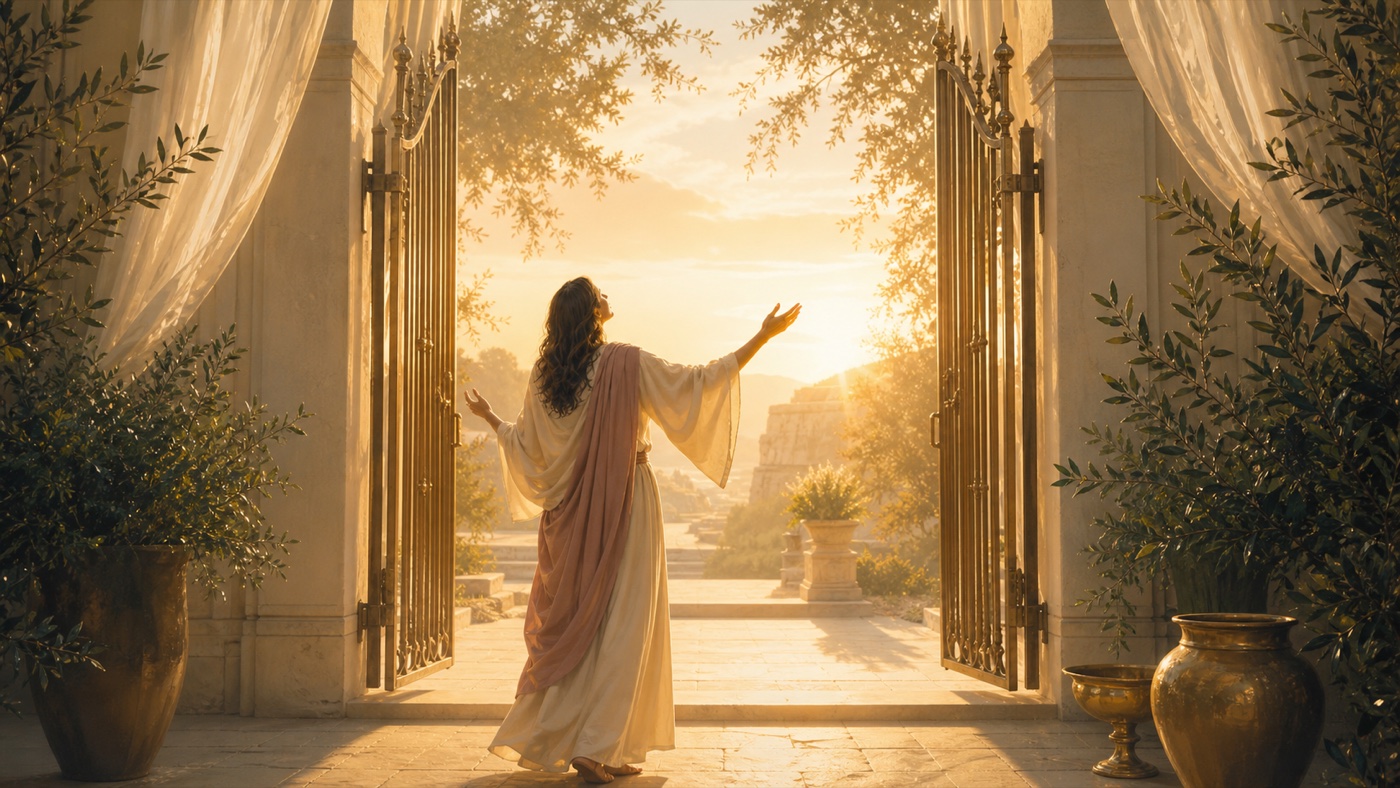
It does not ask you to look inward. Not yet. The Bible's picture of the Gate is people coming through it with thanksgiving, into God's courts with praise. The journey begins not with self-examination but with worship — not because your needs do not matter, but because of what praise does to a soul before it starts to pray.

Praise reorders everything. Most of us, left to ourselves, begin prayer by staring straight at the problem until it fills the whole sky. Beginning with praise turns your face the other way first. It is not denial of what is wrong. It is remembering who God is before you name what is broken — and that order changes how everything after it feels. The same confession, made by someone who has just remembered God's goodness, lands as grace instead of dread.

Think of how differently a hard conversation goes depending on how it starts. Walk in braced for rejection and every word sounds like a verdict. Walk in remembering that the person across from you loves you, and the very same honesty becomes safe. Praise is how you walk in remembering. It is not flattery aimed at a God who needs reassuring. It is you getting reoriented — your soul recalling, before it says anything else, that the One you are coming to is good, and patient, and glad you came.

So you do not have to walk in with your guilt rehearsed and your case prepared. You walk in giving thanks. You start by looking up. And if some morning you have no words of praise in you — if you are too low or too numb to feel grateful — you can still begin here by simply naming one true thing about God and resting on it. Praise is not a mood you have to manufacture. It is a direction you choose to face.

You begin not by proving yourself, but by remembering Him.

Chapter 5 — The Altar: Bring the Burden to Jesus illustration

The Altar

This is where you set down what you have been carrying. And it is the step most likely to go wrong, so we will be careful here.

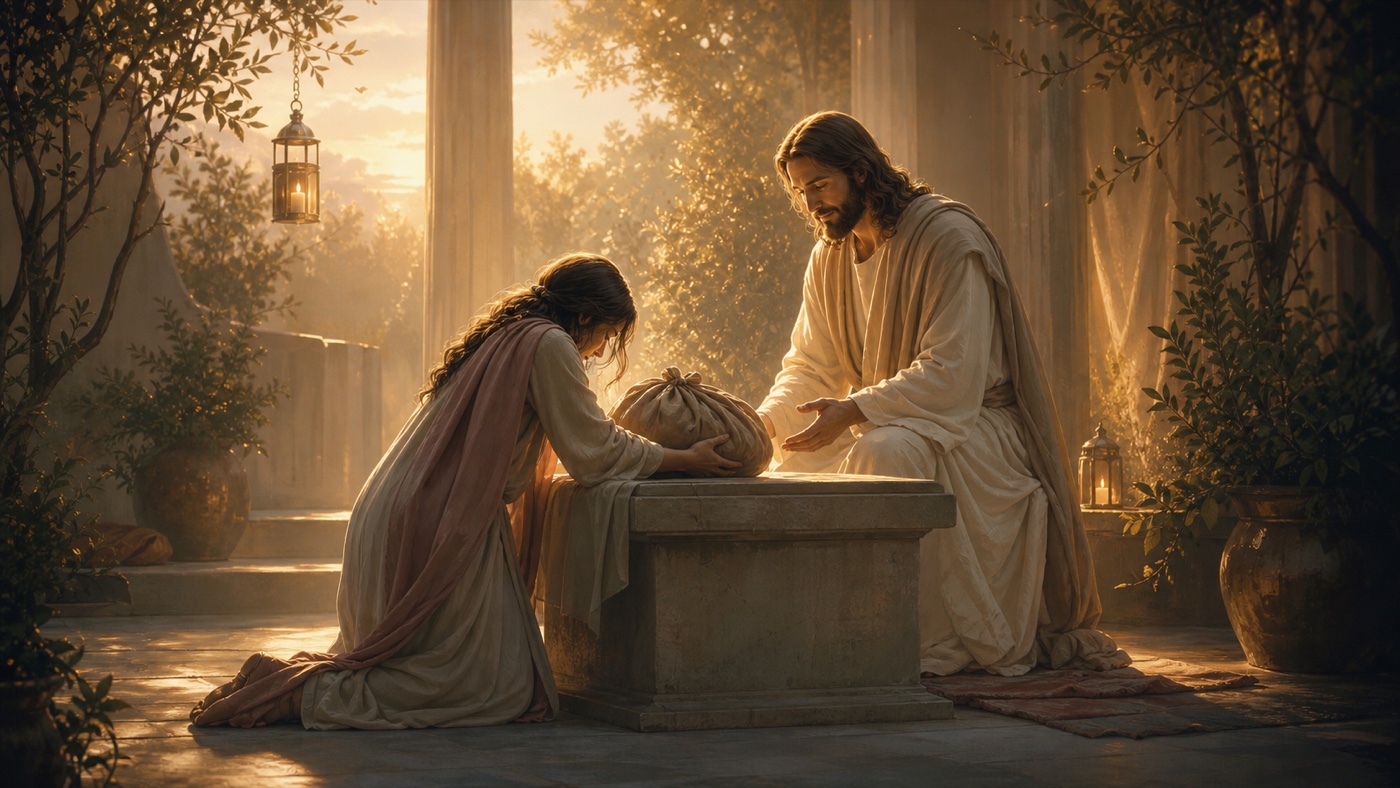
The Altar is the place of honesty — sin named, guilt admitted, the self-protection and the striving handed over. It can feel like the heaviest stop on the pathway. But here is the thing that keeps the Altar from crushing you: it is the place of Jesus as the Lamb. You are not laying your failure on a cold stone to be judged. You are bringing it to the One who already gave Himself for it.

That single fact changes what confession even is. Confession is not spiritual self-hatred. It is not standing in front of a mirror cataloguing how bad you are. It is agreement with God in the presence of grace. It is telling the truth to Someone who already loves you and has already made a way. Surrender, in the same way, is not collapse into shame. It is releasing what could never save you into the hands of the One who can.

So if the Altar has ever trained you to look at yourself more than at Christ, that was a distortion, not the design. The goal here is not to feel terrible enough to be forgiven. The goal is to be honest enough to be free. You do not have to fix the thing before you bring it. You only have to bring it.

And then — and this matters — you do not stay here. Some people pitch a tent at the Altar and live their whole spiritual life in confession and never move on to mercy. The pathway does not leave you there. Grace moves forward. You bring the truth; He carries it; and the very next step is renewal.

There is a particular trap worth naming, because so many sincere people fall into it. Call it the confession treadmill: you confess the same sin, feel a flicker of relief, then doubt whether it really took, so you confess it again, and again, never quite believing you are forgiven. That endless circling is not humility, though it can look like it. It is a quiet failure to trust the Lamb. Real confession lets go. It hands the thing over once and then dares to believe it was received — not because you feel forgiven, but because of who was standing at the Altar to receive it. If you have been on that treadmill, the Altar invites you to step off. You do not have to confess your way into being loved. You already are.

If a burden you carry is too heavy or too tangled to face alone — old wounds, deep pain, things done to you — know that Jesus can meet you in the hidden places, and know too that some burdens are meant to be carried with a trusted pastor, counselor, or wise friend beside you. Bringing it to Him does not mean bringing it only by yourself.

Chapter 6 — The Laver: Washed by the Word illustration

The Laver

The Altar dealt with guilt. The Laver answers a different question: now that I am forgiven, how do I actually become clean — renewed, not just pardoned?

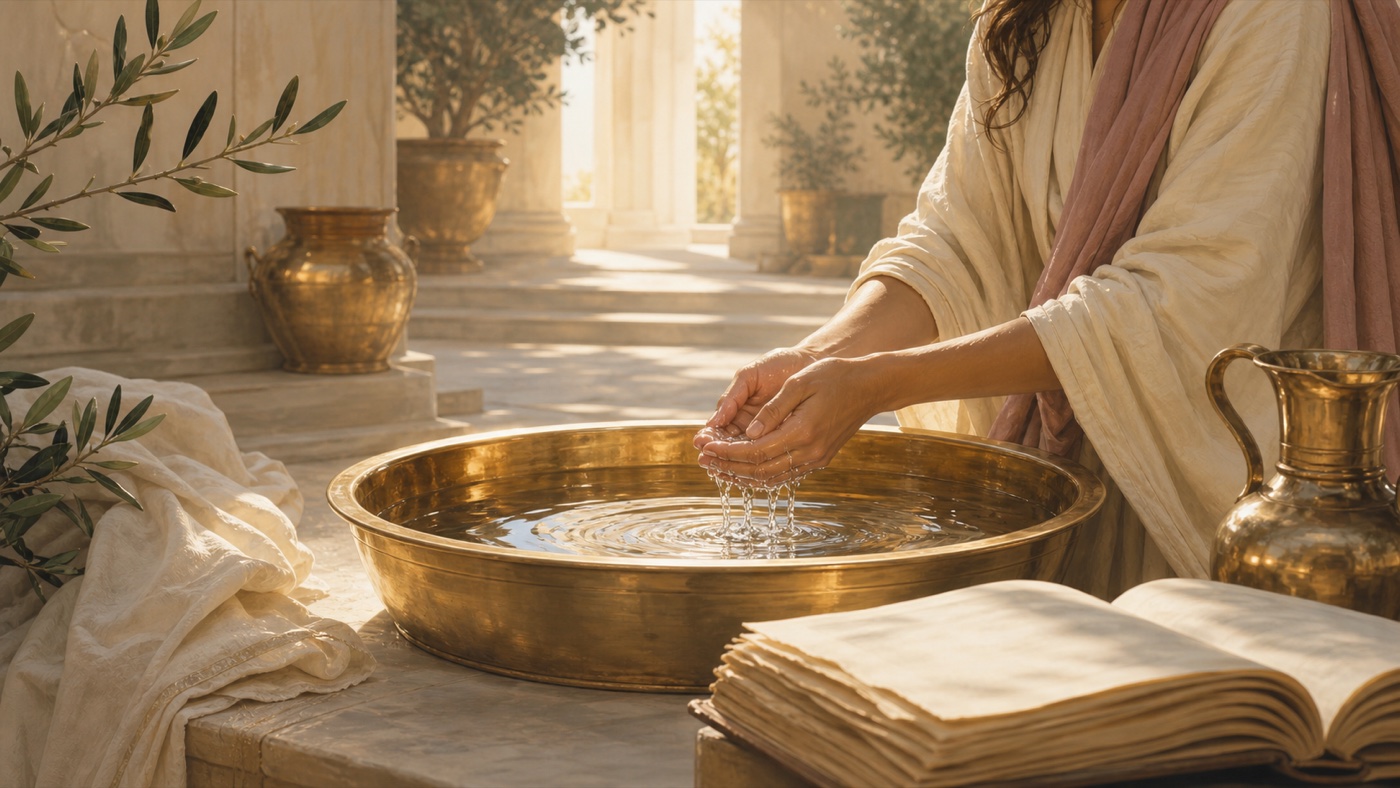
The old picture is a basin of water where the priests washed. Its meaning in this pathway is washing, new birth, daily renewal — and the water is the Word of God. There is a line in one of Paul's letters about Christ cleansing His people "with the washing of water by the word" (Ephesians 5). That is the Laver. You do not scrub yourself clean by sheer effort. You let the truth wash you.

This is the step that protects the whole pathway from stopping at guilt. A forgiven person is not meant to spend their life feeling dirty. They are meant to be made new. So the Laver is good news for anyone stuck in the loop of confessing the same thing over and over and never feeling any cleaner. The cleansing is not your achievement. It is a gift you receive, the way a tired traveler receives water — by letting it wash over you, not by manufacturing it.

There is a deeper word for what happens here: new birth. The washing of the Word is not only about scrubbing off the old; it is about the start of something genuinely new — a life born from above, not patched together from below. That is why self-cleansing was always the wrong picture. You cannot give birth to yourself. You can only receive a life you did not generate. The Laver asks you to stop trying to perform your way back to clean and instead let God's truth do in you what your effort never could.

And it is daily. This is not a one-time bath you take at conversion and never need again. The renewal is ongoing — the Word washing over the same tired, dusty places each day, the way feet that walk in the world need washing again and again. You will not outgrow your need for it, and that is not a flaw in you. It is simply the rhythm of a life kept clean by grace rather than by willpower.

You are not only pardoned. You are being made new.

Chapter 7 — The Candlestick: The Spirit's Light illustration

The Candlestick

By now a quiet danger has crept up on the journey, and the Candlestick exists to deal with it. The danger is this: you might try to live everything you have just received by sheer willpower.

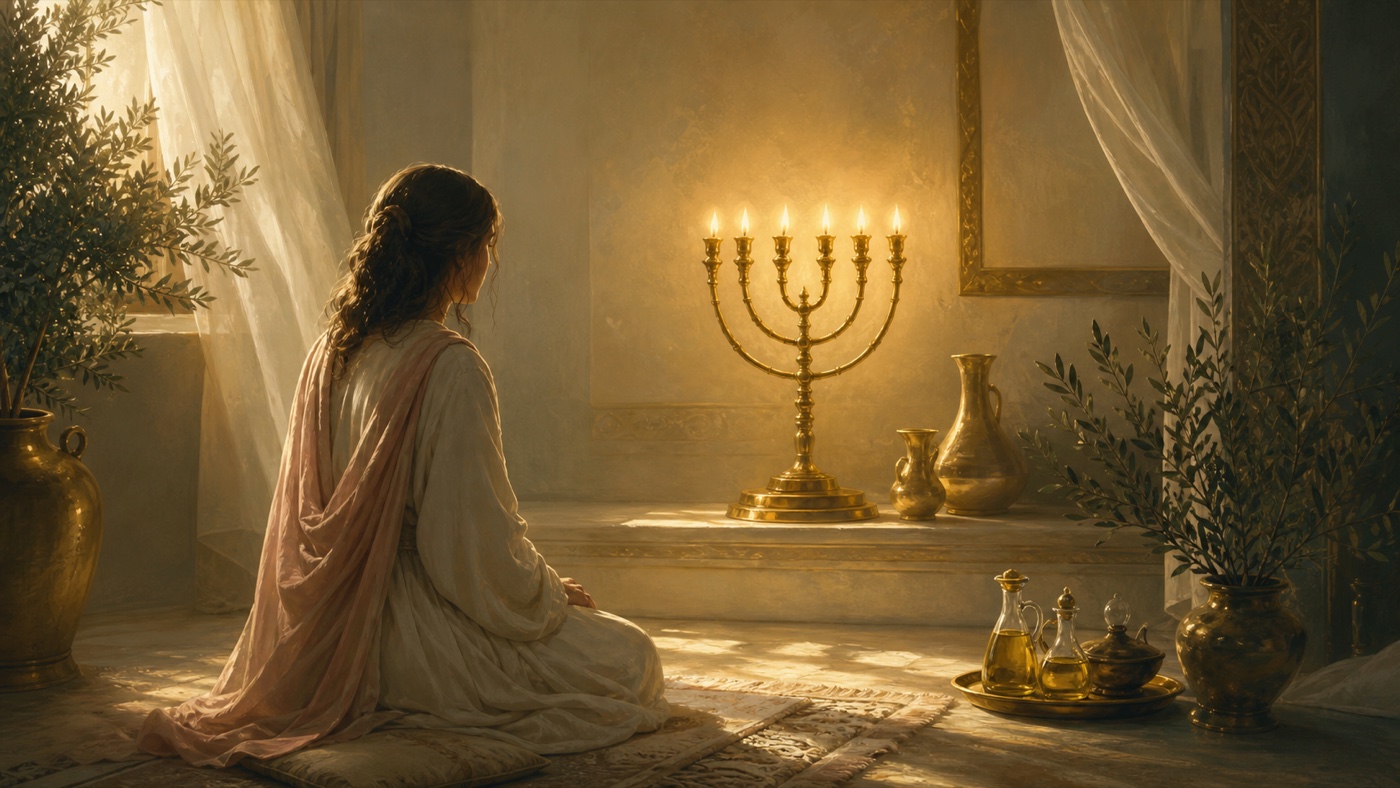
The Candlestick is the lamp in God's house, and it carries the meaning of the Holy Spirit — light, wisdom, the fruit of a changed life, and daily dependence on God. And there is an old observation worth keeping close: the lamp does not make its own oil. The light it gives is not generated by the lamp straining harder. The oil is supplied.

That is the whole point of this step. The new life you have entered cannot be lived on human strain. Light is something you receive. Wisdom is something you ask for and are given. The good fruit — patience, love, gentleness, self-control — grows by the Spirit's presence, not by gritting your teeth. The Candlestick rescues the pathway from becoming a religion of willpower, which is a religion that always, eventually, exhausts the person practicing it.

So if you have been white-knuckling your faith, this step is permission to stop. Not permission to drift — permission to depend.

It helps to know what the Spirit actually does. He is called the Comforter, and one of His quiet works is to make Jesus near — to take everything you have read about Christ and make it real and personal, the way a friend in the room is different from a friend in a letter. He brings light where you were confused, wisdom where you were stuck, and a sense of God's nearness where you felt alone. The light of this lamp is not abstract. It is the felt presence of God walking with you through an ordinary day.

And be patient with how He works, because the Spirit tends to grow fruit before He throws sparks. We often want the dramatic — the powerful experience, the obvious sign. But the truest evidence of the Spirit's presence is usually slower and humbler: a little more patience than you used to have, a little more love for a difficult person, a steadiness under pressure that surprises you. Fruit grows quietly. If you are looking only for fireworks you may miss the very thing God is most carefully doing in you.

You were never meant to be your own source of light.

Chapter 8 — The Table: Fed by Christ illustration

The Table

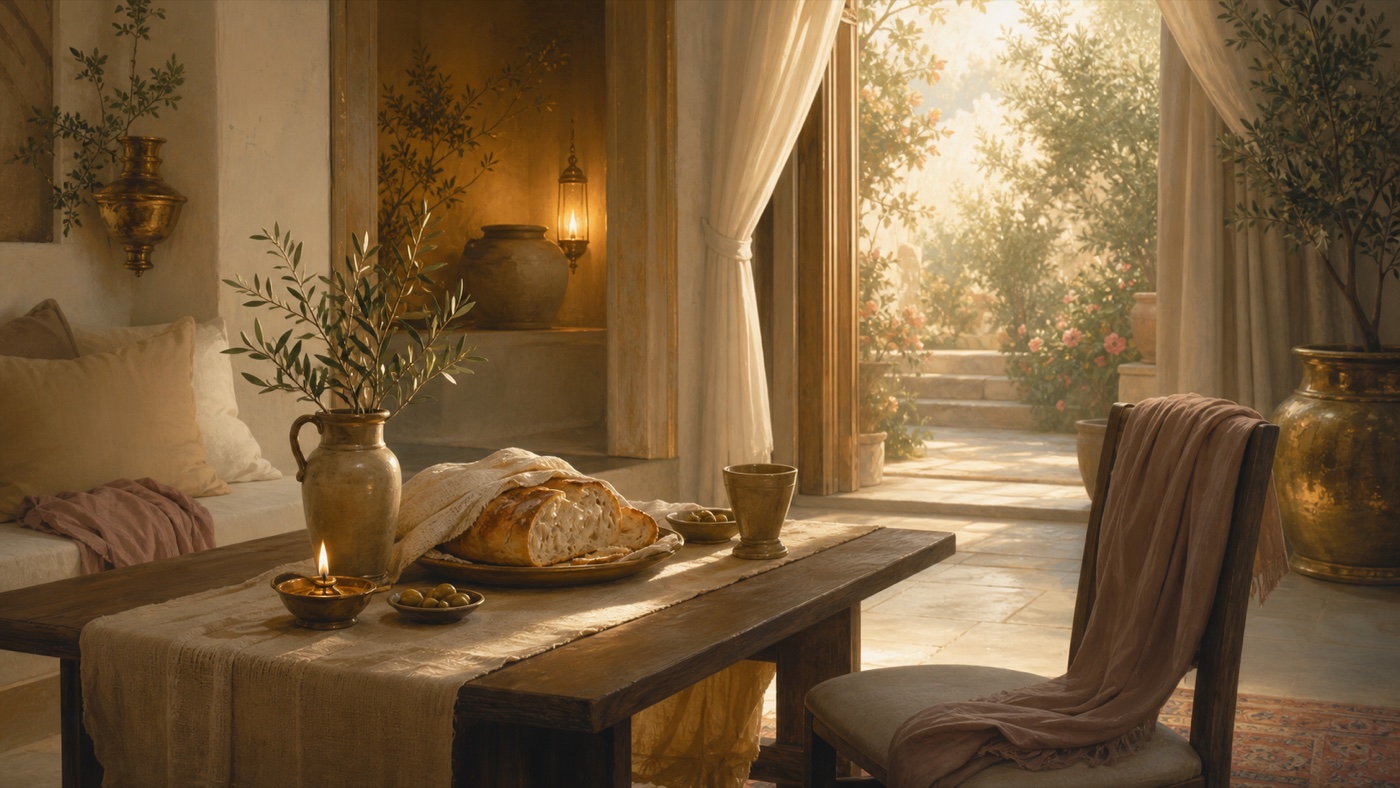
Inside God's house there was a table, and on it, bread. It was always there. And it answers one of the most overlooked questions of the spiritual life: what sustains a person, past the first rush of feeling?

The Table means Jesus as the Bread of Life, the Word as nourishment, and ongoing communion with God. This is a quieter step than the others, and easy to skip — which is exactly why people burn out. Nobody lives on a single dramatic moment of surrender or one good cry at the Altar. A soul, like a body, needs feeding, and it needs feeding regularly. Not the Word as information to collect, but the Word as bread to live on.

There is a hurry in most of us that wants the meeting with God to be efficient. The Table refuses to be rushed. It asks you to stay long enough to actually receive — to read until something feeds you, to sit until you are not just informed but nourished. The deepest communion often comes in the part of prayer we are most tempted to cut short.

And there is something worth noticing about the bread itself: it points to a Person, not a principle. Jesus called Himself the Bread of Life. So when you feed on the Word, you are not finally feeding on information about God — you are feeding on Christ Himself, His character, His life, His words becoming part of you the way food becomes part of a body. This is why two people can read the same chapter and one walks away merely informed while the other walks away strengthened. The difference is whether they came for facts or for communion.

That reframes what a "quiet time" is even for. It is not homework to complete or a box to check. It is a shared meal — time at a table with Someone who loves you, where the point is not how much ground you covered but whether you left more nourished than you came. A meal eaten in a hurry feeds the body but starves the heart. So slow down here. This step rewards the unhurried.

Stay long enough to be fed.

Chapter 9 — The Incense: Prayer That Rises for Others illustration

The Incense

Something beautiful happens at this step: the pathway turns outward. Up until now, much of the journey has been about you — your guilt, your cleansing, your light, your nourishment. The Incense is where a restored person starts carrying others.

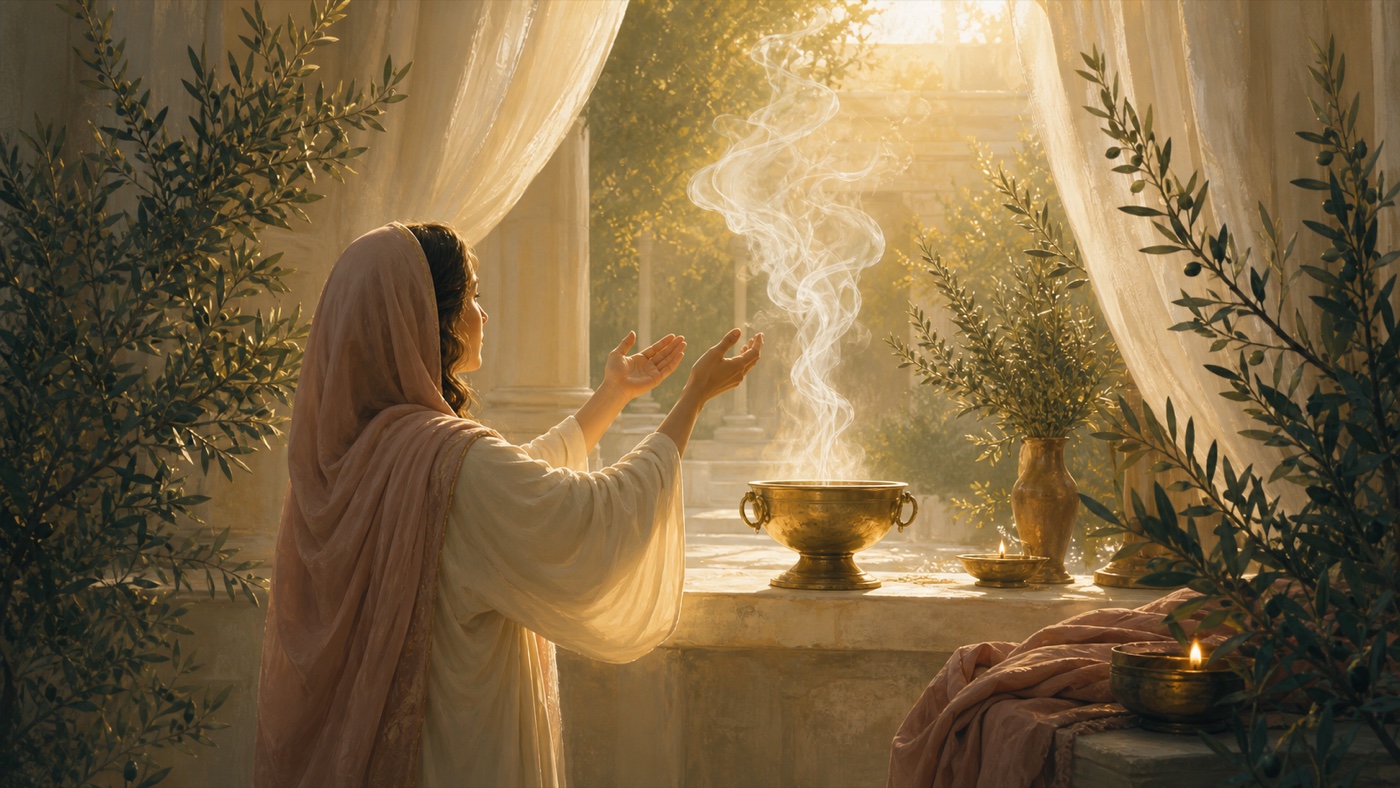
The old picture is incense rising — fragrant smoke ascending — and its meaning is prayer, intercession, thanksgiving, and the burdens of others lifted up to God. A person who has come in through praise, surrendered at the Altar, been washed, received light, and been fed is now ready to do for others what has been done for them: to bring them near.

But notice the difference between two ways of carrying people. Some of us "pray for" others mainly by absorbing their anxiety — taking the weight onto ourselves until we are crushed under it. The Incense teaches a better way. You carry the person, the family, the enemy, the grief, the impossible situation — and you carry them to God, not instead of Him. You lift the burden up rather than swallowing it. That is what keeps intercession from becoming its own slow exhaustion. Prayer here is not frantic smoke. It is love, trust, and communion rising.

There is one more reason this step comes where it does, near the end and not the beginning. The pathway does not ask you to carry others until you have first received — praise, surrender, cleansing, light, and bread all come before intercession. That order is a mercy. People who rush to carry everyone else's burdens before they have let God carry theirs tend to burn out, or grow resentful, or quietly despair. You can only give from a fountain that has first been filled. By the time you reach the Incense, you are not pouring from an empty cup. You are overflowing from a full one.

And there is a quiet dignity in what the old picture says about your prayers. Incense rises and becomes fragrant — pleasing, welcome, received. Your prayers may feel weak to you, half-formed, clumsy, unsure they are even heard. But joined to Christ they rise as something sweet to God. You do not have to pray impressively. You only have to pray honestly, and let Him carry it up.

You were not asked to carry people instead of God. You were invited to carry them to Him.

Chapter 10 — The Most Holy Place: Rest in Mercy illustration

The Most Holy Place

You have come a long way. Praise, surrender, cleansing, light, bread, prayer for others — and now the innermost room, the place the whole journey was always heading toward. And here is the last surprise of the pathway: it does not end in more effort. It ends in rest.

The Most Holy Place is the deepest place in God's house, the place of His presence, His mercy, His covenant of love. And after everything that has come before, the invitation here is not "now strive harder." It is "now rest." Not escape. Not pretending the hard things are not real. Rest — the kind that comes when the burdens you were holding have finally been entrusted to Someone strong enough to hold them.

This is one of the great gifts of the whole pathway. Prayer so often begins in agitation — the crowded mind, the racing list, the low hum of fear. The Seven Steps teach a soul how to move, by grace, toward rest. The destination of nearness is not a feeling you generate. It is a place you arrive when you stop carrying what was never yours to carry.

Now, a word for anyone in whom this innermost room stirs not rest but fear. For some people, the deepest part of God's house has always carried the shadow of judgment — the sense of an account being read, a verdict waiting, a God examining the books to see whether you measure up. If that is you, hold onto this: in this house, you never come into the presence of God without Jesus already there. He is in the room. The mercy seat sits over the law, not under it. The same Savior who met you at the door is your representative at the center — the High Priest whose whole ministry is to bring you near and keep you there.

It helps to know why God ever looks closely at a life. Scripture sometimes pictures Him as a refiner with fire, and that image frightens people until they understand what a refiner is actually doing. A refiner does not heat the metal to destroy it. He heats it to draw the impurities to the surface so they can be lifted away — and he watches the whole time, never leaving, until he can see his own reflection in what is left. That is the heart of God in judgment. Whatever is brought to the surface in His presence is brought up not to condemn you but to be cleansed away. He reveals in order to heal. The fire is in the hands of Someone who loves you and will not look away while you are in it.

So there is assurance here, real assurance, though never the lazy kind that stops caring. The deepest question this room asks is not "have you done enough?" It is gentler and more searching at once: whose name is written in you? To belong to God is not a rank that makes you better than anyone else. If nearness to God ever makes a person harder, prouder, or more contemptuous of others, something has gone wrong. The mark of someone who has truly come this far is the opposite — more forgiving, more humble, more at rest. There is a covenant at the center of this room, and it is a covenant that repairs people: God writes His own ways inside them, softens what was bitter, and teaches them to forgive the way they have been forgiven. That is the real test of having been near to God. The people most at home in God's mercy are the gentlest people you will ever meet.

The journey does not end in striving. It ends in mercy.

Conclusion — Come Near illustration

Conclusion — Come Near

We began with an ache — the feeling of being far from a God you still believed was there. We are ending somewhere very different: in the innermost room of His house, at rest, near.

That movement, from distance to nearness, is the whole point. And here is what I most want you to carry away from these pages: you were never the one who had to close the gap. From the first chapter to the last, the motion has run one direction — God toward you. He built the house. He opened the door. He gave His Son to be your way in, your sacrifice, your washing, your light, your bread, your intercessor, your High Priest. The pathway is not a ladder you climb to a reluctant God. It is a road a willing God laid down so you could find your way home.

So do not turn this into one more thing to perform. You do not have to walk all seven steps tonight. You do not have to feel anything dramatic. You only have to begin — to turn your face toward the One who has been turned toward you the entire time.

The door of God's house is open. It has been open longer than you have been away.

Come near.

How to Pray the Sanctuary Pathway illustration

How to Pray the Sanctuary Pathway

A simple, repeatable way to walk this with God. Use the version that fits the day you are actually having.

The five-minute version

  1. Gate — Praise. Begin by naming who God is and thanking Him. Look up before you look in.
  2. Altar — Surrender. Name the real burden and hand it to Jesus. Don't accuse yourself; just hand it over.
  3. Laver — Cleansing. Read one line of Scripture about who you now are, and let it wash you.
  4. Candlestick — Light. Ask the Spirit for light on one specific thing today.
  5. Table — Nourishment. Read until one line feeds you, then stay there a moment.
  6. Incense — Prayer for others. Lift one person, by name, into God's hands.
  7. Most Holy Place — Rest. Sit in silence: "You are merciful, You are near, I am safe here."

The two-minute version (for hard days)

Some days you will not have it in you to walk the whole house, and that is not a failure. On those days, do only this:

  • One breath of thanks. (Gate)
  • One honest sentence handed to Jesus. (Altar)
  • One moment of rest in His mercy. (Most Holy Place)

That is a real prayer. God is not measuring the length of your visit. He is glad you came.

A note for the long road

You will not always feel close, even doing this. Nearness is not mainly a feeling; it is a fact you walk into and a relationship you keep returning to. Some of the most faithful prayer happens on the days it feels like nothing is happening at all. Keep coming. The door does not close because you went quiet for a while.

The pathway is always open, and it always leads to the same place: home, with Him.

01 / 15